Category: truck drivers

How Much Do Truck Drivers Make? A Data-Driven Guide for 2026

Pay in trucking is not one fixed number. It changes based on miles, hours, freight, and lanes. If you are comparing job offers or planning a career move, there is more than one right answer to the question: how much do truck drivers make?

A local driver may earn overtime on an hourly schedule, while an over-the-road driver is often paid by the mile and depends on consistent dispatch within Hours of Service rules.

This guide breaks down real-world trucking pay models into clear, practical earnings estimates, including:

  • Hourly pay
  • Cents per mile
  • Salary
  • Percentage-based pay

It translates those models into day, week, month, and year figures using the latest data from the Bureau of Labor Statistics and FMCSA assumptions.

What Affects Truck Driver Pay

Several factors can change how much a truck driver earns, including:

  • Route type: local, regional, or OTR
  • Freight type: dry van, reefer, flatbed, tanker, or hazmat
  • Geographic region
  • Endorsements
  • Bonuses
  • Accessorial pay

The guide also explains the difference between company driver pay and owner-operator revenue and expenses, so you can compare offers with realistic expectations.

Defining Truck Driver Pay

Before we can answer the income question with actual numbers, we need a clear definition of what “truck driver pay” means. In trucking, pay is not a single number on a rate sheet. Instead, it’s a combination of:

  • How you’re paid (hourly, per mile, salary, percentage, or day rate)
  • What time or activity counts as paid work
  • Which additional pay items apply on a given load or route

Understanding those pieces is essential before comparing job offers or estimating annual income.

The Two Layers of Truck Driver Pay

Truck driver compensation usually works in two layers: the base pay model and the earnings adjustments that affect your final take-home pay.

1. Base Pay Models

The first layer is the structure used to calculate your primary pay.

  • Hourly pay – Drivers are paid for each hour on duty, often with overtime after 40 hours in a week. This model is common for local routes and dedicated accounts.
  • Cents per mile – Drivers earn a set rate for every paid mile, usually based on dispatched miles rather than odometer miles.
  • Salary – A fixed weekly or pay-period amount, sometimes combined with performance incentives.
  • Percentage of load – Drivers receive a set percentage of the linehaul revenue for each load. This model is more common for owner-operators or specialized fleets.
  • Day rate – A flat payment for a shift or route. Some carriers combine day rates with mileage or stop pay.

2. Factors That Change Real Earnings

The second layer includes the pay elements that can significantly increase or decrease your effective hourly or weekly income.

Common additions include:

  • Detention pay – Compensation for waiting at a shipper or receiver.
  • Layover pay – Pay for unexpected overnight delays between loads.
  • Stop pay – Extra pay for additional pickups or deliveries.
  • Specialized task pay – Tasks like tarping or load securement for flatbed freight.
  • Per diem programs – Part of income is treated as a non-taxable allowance, changing taxable income but not necessarily total pay.
  • Performance bonuses – Safety, fuel efficiency, or on-time delivery incentives.

These factors can make a major difference in what a driver actually earns.

For example:

  • A driver earning $0.60 CPM who runs 2,400 paid miles would make $1,440 before accessorial pay.
  • A driver earning $27 per hour who works 45 hours would earn $1,215 before taxes.
  • However, if that same hourly driver works 55 hours with time-and-a-half after 40, their weekly earnings could exceed the CPM example.

The key takeaway is that the unit of pay (mile vs. hour) and the actual miles or hours worked determine real income.

When asking how much truck drivers make, two job offers with similar advertised rates can produce very different weekly results depending on:

  • Miles available to run
  • Overtime eligibility
  • Accessorial pay
  • Dispatch consistency

Understanding these components helps drivers evaluate offers more accurately and predict realistic weekly income.

With these definitions in place, the next step is to look at the national trucking pay picture for 2026. That baseline will help you benchmark job offers before diving into detailed pay models and real-world earning scenarios.

Truck Driver Pay Structures Explained

Understanding how drivers are paid matters just as much as the headline rate. Different pay structures reward different behaviors, miles driven, hours worked, or load value, which is why answers to how much truck drivers make can vary widely even when the advertised rate looks similar.

Use the models below to understand how each structure translates into real weekly and hourly earnings.

Cents-Per-Mile: Productivity-Driven Pay

CPM pay ties earnings directly to the number of dispatched miles you run.

Example calculation:

  • $0.60 CPM × 2,600 miles = $1,560 weekly gross

How that translates hourly depends on how much time is spent on duty:

  • If the week requires 52 on-duty hours, the effective hourly rate is about $30/hour.
  • If delays increase on-duty time to 65 hours, the effective rate drops to roughly $24/hour.

CPM rewards:

  • Consistent freight
  • Efficient dispatch
  • Minimal waiting time

However, unpaid dwell time at shippers or receivers can reduce the real hourly value of a mile-based rate.

Hourly Pay

Many local, city, and pickup-and-delivery positions use hourly pay.

These jobs often include overtime rules such as:

  • Time-and-a-half after 40 hours per week
  • Sometimes overtime after 8 hours per day in union environments

Example:

  • $28/hour for 50 hours worked
  • 40 hours × $28 = $1,120
  • 10 hours × $42 (time-and-a-half) = $420

Total weekly pay: $1,540

This pay model protects earnings on:

  • Heavy traffic days
  • Short routes with frequent stops
  • Long loading or unloading delays

Because all on-duty time counts, detention is effectively paid automatically.

Salary or Day-Rate: Stable Paychecks, Variable Hourly

Some carriers offer fixed weekly salaries or daily rates to provide predictable income.

Example:

  • $300 day rate × 5 days = $1,500 per week

But the effective hourly depends on how long each shift lasts:

  • 8-hour days → $37.50/hour
  • 12-hour days → $25/hour

Before accepting a salary or day-rate position, clarify:

  • Minimum work guarantees
  • Expected daily hours
  • Load or route requirements
  • Pay policies during breakdowns or slow freight periods

Percentage of Load: Earnings Tied to Freight Revenue

Under this model, drivers earn a percentage of linehaul revenue, often 23%–30%.

Example:

  • Load 1 linehaul: $1,800
  • Load 2 linehaul: $2,200
  • Total linehaul: $4,000

At 25%, the driver earns $1,000 for the week before extras.

This structure can outperform CPM when:

  • Freight rates are strong
  • Lanes are high-paying
  • Accessorial pay is included

However, it can also fluctuate with market rate changes and broker pricing.

Accessorial Pay: Small Items That Add Up

Accessorial pay compensates drivers for work that isn’t simply driving miles.

Common examples include:

  • Detention: $15–$30 per hour after a grace period
  • Layover: $100–$200 per day
  • Stop pay: $15–$50 for extra stops
  • Tarp pay: $50–$100
  • Breakdown pay
  • Short-haul minimums
  • Weekly income guarantees

Even small amounts can add up quickly.

Example:

  • 4 hours of detention at $25/hour = $100 extra pay

Weekly guarantees can also stabilize income, for example, a $1,100 weekly minimum during slow freight or equipment downtime.

Per Diem and Performance Incentives

Many carriers offer per diem programs that shift part of driver income into non-taxable reimbursements for meals and incidentals while away from home.

Typical ranges:

  • $60–$70 per day, based on federal per diem guidelines

This can increase take-home pay after taxes, even if the taxable wage appears lower.

Additional incentives may include:

  • Safety bonuses
  • Fuel efficiency bonuses
  • On-time delivery bonuses

These bonuses often add:

  • $0.01–$0.05 CPM, or
  • $50–$200 per month

Over time, these incentives can significantly narrow the earnings gap between different pay models.

The structure of pay determines how time, miles, and delays translate into real income. Two drivers with similar advertised rates may earn very different weekly totals depending on:

  • Pay structure
  • Freight availability
  • Waiting time
  • Accessorial pay

Next, we’ll convert common trucking pay setups into hourly, daily, weekly, monthly, and annual earnings so you can compare job offers side-by-side.

Smiling truck driver during CVSA inspection

Truck Driver Pay, National Averages and What They Mean

National averages provide a quick benchmark for truck driver pay, but the mean alone hides wide differences based on experience, route type, freight specialization, and pay structure. To understand what drivers actually earn, you need both the middle of the market and the spread around it, along with a clear understanding of what time counts as paid work.

National Average Pay for Truck Drivers

According to the latest Bureau of Labor Statistics Occupational Employment and Wage Statistics for Heavy and Tractor-Trailer Truck Drivers (Occupation 53-3032), the national averages are:

  • Average hourly wage: $26.92
  • Average annual salary: $55,990

But that single average masks a broad range across the industry.

The 10th to 90th percentile pay range stretches significantly:

  • Lower end: roughly mid-$30,000s annually
  • Middle of the market: around low-$50,000s
  • Upper end: upper-$70,000s to low-$90,000s

On an hourly basis, that distribution translates roughly to:

  • High-teens per hour at the low end
  • Mid-$20s per hour around the median
  • High-$30s per hour at the top

These differences reflect not only experience and tenure but also job type, freight specialization, and regional market conditions.

How Drivers Move Through the Pay Range

Understanding how drivers progress through this pay range is more useful than focusing on the average alone.

Entry-level company drivers typically start in the lower quartiles while they build a safe driving history, learn new lanes and freight patterns, and complete probationary periods.

After a year or two of clean driving records and consistent performance, many drivers move toward the middle of the pay distribution as they gain access to higher mileage routes, dedicated accounts, and pay step increases. 

Drivers in the top quartile of earnings often work in roles that require greater responsibility, experience, or time away from home. Examples include LTL linehaul positions with seniority, team OTR operations running high weekly miles, and specialized freight such as flatbed, tanker, or hazmat that requires endorsements and additional handling.

Gross Pay vs. Effective Pay

National averages also blur a critical distinction: gross pay versus the effective value of your working time.

For example, under a mileage-based pay model:

  • 2,400 miles × $0.60 CPM = $1,440 weekly linehaul pay
  • Add 6 hours of detention at $25/hour = $150

Total weekly gross: $1,590 before taxes and benefits

However, if traffic congestion or loading delays reduce drivable miles, the weekly income falls even though the CPM rate stays the same.

Compare that with an hourly local role:

  • $28 per hour × 50 hours = $1,400 weekly base pay

Overtime rules and shift premiums determine whether that number increases as the workweek expands. Two drivers may report similar yearly earnings, but the predictability and structure of their weekly pay can be very different.

The Role of Accessorial Pay

Accessorial payments are often the hidden factor behind higher weekly totals. These payments compensate drivers for work that mileage pay alone doesn’t capture.

Common accessorial pay includes:

  • Detention pay
  • Layover pay
  • Stop pay
  • Breakdown pay
  • Tarping pay for flatbed loads

Carriers also frequently add:

  • Safety bonuses
  • Fuel-efficiency incentives
  • Performance bonuses
  • Per diem programs that adjust taxable income

During periods of strong freight demand, these extras can significantly increase weekly earnings. During slower freight cycles, they can help stabilize income.

Geography and Cost of Living

Another factor hidden inside national averages is regional variation.

A single national pay figure blends together high-paying metropolitan freight hubs, lower-paying rural regions and dense port and intermodal markets where hourly pay rises but miles may decrease due to congestion.

The same salary can have very different purchasing power depending on where a driver lives or where their routes originate.

The Operational Ceiling: Hours of Service

Finally, every trucking job operates under the limits set by federal Hours of Service regulations.

Drivers are generally limited to:

  • 11 hours of driving within a 14-hour duty window
  • 60 or 70 on-duty hours over 7 or 8 days

Because of these limits, earnings depend heavily on utilization, how efficiently those legal hours are used. Factors that influence utilization include dispatch efficiency, appointment scheduling, loading and unloading delays, and shipper and receiver operations. 

Two drivers working under the same pay rate can end up in very different earnings brackets depending on how productive their available hours are.

How Much Do Truck Drivers Make a Week

Weekly pay is where the numbers start to matter most for drivers comparing job offers or planning household budgets. The question how much do truck drivers make becomes much clearer when pay models are translated into a realistic week of miles or hours, then adjusted for accessorial pay.

Real-World Weekly Example

Consider a regional dry van driver named Jordan who is paid $0.60 per mile.

In a typical week, Jordan runs 2,200 paid miles, plus a few additional payments:

  • 3 hours of detention at $25 per hour
  • 2 extra stops at $20 per stop

Weekly pay calculation:

  • Mileage: 0.60 × 2,200 miles = $1,320
  • Detention pay: $75
  • Stop pay: $40

Total weekly gross: $1,435

Weekly earnings can vary depending on miles run:

  • Slower week (1,700 miles): about $1,195
  • Typical week (2,200 miles): about $1,435
  • Strong week (2,600 miles): about $1,675

Even with the same CPM rate, weekly income changes significantly depending on freight volume and dispatch efficiency.

Pay Model Drives the Spread: CPM vs. Hourly

Mileage-based pay turns distance into income, while hourly pay turns time into income.

Using Jordan’s $1,435 CPM week as a reference, compare it to a local hourly driver:

  • $28 per hour
  • 50 hours worked
  • 10 hours overtime (time-and-a-half after 40 hours)

Weekly calculation:

  • 40 hours × $28 = $1,120
  • 10 hours × $42 = $420

Total weekly pay: $1,540

In markets with heavy congestion or frequent loading delays, hourly structures can produce more consistent weekly earnings.

Utilization Volatility Is the Biggest Lever

The largest factor affecting CPM earnings is utilization, the number of miles a driver can run in a given week.

At $0.60 CPM, every 500-mile change shifts weekly income by $300.

Jordan’s example illustrates this clearly:

  • 1,700 miles: slower freight week
  • 2,200 miles: average productivity
  • 2,600 miles: strong utilization week

Weather disruptions, freight demand, and shipper delays can all affect mileage totals even when the pay rate stays the same.

Accessorial Pay Cushions Slow Weeks

Accessorial payments help offset lost productivity when miles drop.

Typical accessorial pay includes:

  • Detention
  • Layover
  • Stop pay
  • Breakdown pay

In Jordan’s example, $115 in accessorial pay (detention plus stop pay) accounted for roughly 8% of weekly gross income. That amount may feel small during a high-mileage week but becomes much more important when miles decrease.

Team Driving: More Miles, Split Pay

Team operations often run much higher weekly miles, but the pay is split between drivers.

Example:

  • Truck rate: $0.80 CPM
  • Weekly miles: 6,000

Each driver effectively receives half of the truck rate:

  • $0.40 CPM per driver

Mileage pay per driver:

  • 0.40 × 2,400 miles ≈ $960

When teams run stronger weeks of 7,000–7,500 miles, individual pay increases even though the rate itself stays the same. Like solo CPM pay, utilization remains the key driver of earnings.

Weeks Worked Matter as Much as Weekly Pay

Estimating annual income using 52 identical weeks can be misleading. Most drivers take time off for vacation, home time, equipment maintenance and slow freight periods. 

Many drivers realistically work 48 to 50 paid weeks per year.

Using Jordan’s typical week of $1,435:

  • 48 weeks: about $68,880
  • 52 weeks: about $74,620

This perspective helps drivers compare job offers more accurately and set realistic annual income expectations.

Geography, Lanes, and Cost of Living

Where you drive and which lanes you run can dramatically change what a “good” pay rate actually means. State or national averages often hide two critical variables that shape real driver income:

  • How many productive miles or paid hours you can log in a typical week
  • The cost of living where you live and park the truck

Geography, lane balance, congestion, and local freight mix all interact to determine how much a posted rate translates into actual take-home pay.

High-Pay Coastal and Port Markets

Dense coastal regions and port-heavy markets often advertise higher hourly wages or higher CPM rates. These markets frequently pay premiums because of heavy congestion, long wait times at ports or distribution centers, and tighter labor markets. 

However, these same conditions can reduce productivity. Traffic delays, short-haul turns, and shipper dwell times often limit how many miles drivers can run in a week.

For example:

  • A driver running urban Northeast lanes at $0.70 CPM but averaging 2,000 miles per week because of congestion might gross about $1,400 before accessories.
  • A local pickup-and-delivery driver earning $30 per hour for 45 hours would gross about $1,350 for the week, often with more predictable scheduling.

In these markets, policies such as detention pay, stop pay, and minimum pay guarantees become especially important because they compensate drivers for lost driving time.

Long-Haul Corridors and Higher Utilization

Long-haul freight corridors in the Midwest, Plains, and Southwest typically offer slightly lower CPM rates but allow for more consistent movement and higher weekly mileage.

These regions tend to have fewer traffic bottlenecks, longer average lengths of hauls and faster loading and unloading cycles. 

Higher utilization can offset lower rates.

Example:

  • $0.65 CPM × 2,700 miles = $1,755 weekly gross

Even though the rate per mile is lower than the Northeast example, the higher mileage produces a stronger weekly total. Drivers who prioritize maximum weekly earnings over daily home time often find these freight-dense regions more consistent across the year.

Lane Balance and Freight Direction

Another geographic factor is lane balance, the relationship between inbound and outbound freight.

Some regions have strong freight flowing in but weaker freight leaving the market. This imbalance can lead to:

  • Deadhead miles
  • Longer wait times for reloads
  • Lower overall productivity

Common examples include:

  • Florida produce markets
  • Upper New England retail inbound lanes
  • Energy-sector freight swings in oil regions

Drivers who run balanced lane networks, where outbound freight is as reliable as inbound, often earn more consistent weekly income.

Even slightly lower-paying freight on a balanced lane triangle can outperform a high-paying inbound lane that forces drivers to deadhead or sit idle waiting for the next load.

Cost of Living and Real Purchasing Power

Cost of living also changes how meaningful a salary really is once the paycheck reaches the household budget.

Higher average trucking wages are often reported in places such as:

  • Alaska
  • New Jersey
  • Washington
  • The District of Columbia

Meanwhile, lower averages appear in many parts of the Southeast.

However, higher wages in major metro areas are often offset by:

  • Housing costs
  • Taxes
  • Everyday living expenses

For example:

  • A $75,000 annual trucking income in a high-cost metro area may provide similar purchasing power to $65,000 in a lower-cost region with steady freight.

For local and regional drivers who must live near their terminal, this difference shows up immediately. Over-the-road drivers sometimes benefit from geographic arbitrage, living in a lower-cost state while running freight through higher-paying markets.

The Bottom Line on Geography and Pay

The “best” location for trucking pay depends on what matters most to the driver:

  • Higher pay per mile or per hour
  • Maximum weekly miles
  • Consistent reloads and balanced lanes
  • Strong purchasing power at home

That’s why answering how much truck drivers make requires more than looking at the posted rate. Real earnings depend heavily on lane quality, freight flow, congestion, and local cost of living as much as the pay structure itself.

How Pay Is Structured in Trucking

Most pay disputes in trucking start with a misunderstanding of the pay model, not the headline rate. Small details in how miles, time, and extras are paid can change weekly income by hundreds of dollars. Before accepting an offer or quoting a job, use the checks below to spot common traps.

Chasing the Highest CPM Without Confirming Average Miles

A $0.70 CPM advertisement can actually earn less than a $0.58–$0.62 CPM position if the higher rate comes with fewer miles or frequent short-haul loads. Carriers can easily market a higher rate, but utilization, how many miles you actually run, is harder to verify.

Ask the recruiter or fleet manager for the last 90 days of average paid miles for the exact fleet or lane, and request it in writing.

Example comparison:

  • 0.58 × 2,600 miles = $1,508 weekly
  • 0.70 × 1,900 miles = $1,330 weekly

In this case, the lower CPM with steady miles produces higher weekly pay.

Not Checking How Miles Are Measured

Mileage pay depends heavily on how the carrier calculates miles.

Common methods include:

  • HHG miles (shortest route)
  • Practical miles
  • Hub or odometer miles

Some carriers also exclude deadhead miles or pay them at a reduced rate. The difference between mileage methods can reduce expected earnings by 3–8%.

Always verify in writing:

  • Whether miles are HHG, practical, or hub
  • Whether deadhead miles are paid
  • If deadhead is paid at full CPM, reduced CPM, or flat pay

Example:

  • 2,400 HHG miles × $0.60 = $1,440
  • If the real hub distance averages 2,520 miles, using HHG leaves about $72 per week unpaid.

Assuming All On-Duty Time Is Paid Under CPM

Under mileage pay, many on-duty tasks are not automatically compensated.

These often include:

  • Pre-trip inspections
  • Post-trip inspections
  • Fueling
  • Waiting at docks

Detention pay usually begins only after a grace period of 2–4 hours, and some carriers require dispatcher approval before it starts.

Always confirm:

  • The detention trigger time
  • The hourly detention rate
  • Whether approval is required

Example:

  • Five hours waiting at a shipper
  • First 2 hours unpaid grace period
  • $25/hour detention rate

If detention begins after two hours, you receive 3 hours × $25 = $75.

If detention begins after four hours, only 1 hour is paid = $25.

Misreading Overtime Eligibility

Many interstate drivers fall under the Motor Carrier Exemption, which means overtime laws may not apply. Local and regional roles are more likely to include overtime pay, but the threshold varies.

Overtime policies may include:

  • Time-and-a-half after 40 hours
  • Time-and-a-half after 50 hours
  • No overtime pay

Example comparison:

  • $28/hour × 50 hours with overtime after 40
    • 40 × $28 = $1,120
    • 10 × $42 = $420
    • Total: $1,540
  • $28/hour × 50 hours with no overtime
    • 50 × $28 = $1,400

A misunderstanding of overtime policy can easily distort expected annual income.

Overlooking Accessorial Pay and Per Diem Details

Many trucking ads highlight CPM while excluding additional pay categories such as:

  • Stop pay
  • Tarp pay
  • Unload pay
  • Layover pay
  • Breakdown pay
  • Holiday pay

Per diem programs can also affect how earnings appear. They may increase take-home pay but reduce taxable wages, which can influence some benefits calculations.

Request the full pay rate sheet before accepting an offer.

Example estimate:

  • 4 extra stops per week × $20 stop pay
  • Weekly extra pay: $80
  • Monthly extra pay: about $346 (based on 4.33 weeks)

Also confirm:

  • The per diem amount
  • How it is applied to mileage or hourly pay
  • How it affects taxable income and base wages

Percentage-of-Load Without Knowing the Base

Some trucking jobs pay a percentage of load revenue, but the definition of that revenue varies.

Some contracts calculate percentage on linehaul only, excluding:

  • Fuel surcharge
  • Accessorial charges
  • Additional fees

This reduces the driver’s share of the load.

Always ask: “Percentage of what?” and review sample settlements.

Example:

  • 25% of $3,000 linehaul = $750

If the load also includes:

  • $600 fuel surcharge
  • $100 accessorial pay

Total load value: $3,700

If the percentage only applies to linehaul, the driver loses $175 compared with receiving 25% of the full amount.

The Key Takeaway

When comparing offers and estimating how much truck drivers make, convert every job to the same unit, weekly dollars based on verified miles or hours and the full pay policy.

Taking the time to check these details turns an attractive headline rate into a clear, apples-to-apples comparison of real earnings potential.

Trucker Deductions

Market Cycles, Seasonality, and What Changes Year to Year

Truck driver pay does not move in a straight line, it follows the freight market. Capacity, shipper demand, and diesel prices rise and fall on their own timelines, and those changes ripple through rates, miles, and the types of loads available. Understanding this rhythm helps turn static pay figures into a more realistic, dynamic view of what drivers can expect to earn over time.

Freight Cycles and Their Impact on Earnings

Freight markets typically move in recognizable cycles. When demand rises faster than the supply of trucks and drivers, such as during the freight surge of 2020–2021, spot rates climb, detention is easier to bill, and available miles increase. In contrast, when new capacity enters the market and freight demand cools, as seen during 2023–2024, spot rates soften, contract rates tighten, and competition for productive miles increases.

These shifts affect different types of drivers in different ways.

Owner-operators often feel diesel price swings most directly. When fuel prices spike quickly, operating costs rise immediately. Until fuel surcharges or rates adjust, higher diesel prices can temporarily reduce net income.

Company drivers experience the cycle differently. Their base pay rate may remain stable, but during softer freight markets they may see fewer weekly miles, reduced bonus opportunities, land less overtime or incentive pay.

Because of these factors, the answer to how much truck drivers make changes with the market cycle rather than remaining fixed year to year.

Seasonal Patterns in Trucking

Seasonality adds another layer on top of broader freight cycles. Certain freight segments consistently follow seasonal patterns.

Examples include:

  • Refrigerated freight: spring produce season and late-year retail demand
  • Flatbed freight: construction and manufacturing cycles
  • Tanker freight: agricultural and chemical production schedules

Winter conditions also play a role. Snow, ice, and shorter daylight hours often slow average driving speeds and increase detention risk. While this can increase hourly pay or accessorial earnings, it may reduce total weekly miles for drivers paid primarily by CPM.

Regional freight surges can also shift lane balance temporarily. Harvest seasons, port activity spikes, and major retail cycles can strengthen outbound freight in some regions while weakening it in others. These shifts influence weekly earnings depending on whether drivers are paid hourly, by the mile, or by a percentage of load revenue.

Career Strategy During Market Swings

Freight cycles also influence long-term career strategy. Drivers with additional endorsements or equipment experience can move more easily between freight segments when the market shifts.

For example:

  • Hazmat or tanker endorsements can open specialized freight opportunities
  • Flatbed experience can provide access to construction-related freight
  • Reefer work may offer more consistent seasonal demand

Fleet structure matters as well. Companies that rely heavily on contract freight often trade higher peak earnings for greater stability during slower markets. Operators working heavily in the spot market can outperform during strong cycles but must manage risk carefully when rates decline.

Drivers and fleet owners often watch a few key indicators to anticipate market changes:

  • Diesel price trends
  • The number of new carriers entering or leaving the market
  • Tender acceptance and rejection rates from shippers

Monitoring these signals helps drivers decide when to pursue more miles, adjust lanes, or negotiate better accessorial terms.

Bringing It All Together: What Truck Drivers Really Make

Truck driver income is the result of several factors working together: the pay model, how many miles or hours you can realistically run, the protections built into the pay structure, and the lanes you operate within federal Hours of Service limits.

The most accurate way to understand how much truck drivers make is to convert every offer into expected weekly income using verified miles or hours. From there, add accessorial pay, consider how per diem programs affect take-home pay, and estimate the number of working weeks in a year. Geography, freight demand, and seasonal shifts will influence those totals, but the underlying rule stays the same: productivity you can actually achieve, and policies that compensate your time, matter more than headline CPM or hourly numbers.

Drivers comparing jobs should pressure-test each opportunity by requesting real data. Ask carriers for recent averages on weekly miles or paid hours, review the full rate sheet for accessorial pay, and understand how overtime, detention, and guarantees are handled. With that information, you can choose the mix of route type, freight segment, and schedule that turns your hours on duty into reliable income.

Frequently Asked Questions About Truck Driver Pay

How does truck driver pay work, and what are the common pay models?

Trucking pay typically combines a base pay model with additional compensation. The most common base structures include:

  • Hourly pay
  • Cents per mile
  • Salary
  • Day-rate pay
  • Percentage of load revenue

Each structure converts time, miles, or load value into income differently. On top of the base pay, drivers may earn accessorial pay for work that isn’t strictly driving. These can include detention, layover, and stop pay.

Some carriers also offer per diem programs, which shift part of earnings into a non-taxable reimbursement category for meals and incidental expenses. Ultimately, your true weekly and hourly pay depends on utilization, the number of miles or paid hours you actually log under the pay structure.

How do geography, lane patterns, and cost of living change the real value of my pay?

Location and freight lanes can significantly affect how much you actually earn.

  • Coastal and port markets often advertise higher rates but may limit miles due to traffic, short-haul routes, and congestion. In these areas, accessorial pay and minimum guarantees become more important.
  • Midwest and Southwest freight corridors may offer slightly lower CPM rates but allow higher weekly miles and more consistent movement, which can lead to stronger weekly totals.
  • Lane balance matters as well. Routes with strong outbound and inbound freight reduce deadhead miles and waiting time.

You should also compare income against local housing costs, taxes, and everyday expenses to determine the true purchasing power of a paycheck.

Which is better for drivers: cents-per-mile or hourly pay?

The best option depends on the type of freight and driving environment.

  • CPM pay works best when freight flows steadily, dwell times are low, and drivers can run high weekly miles within Hours of Service limits. However, unpaid waiting time can reduce the effective hourly rate.
  • Hourly pay protects drivers from income loss during traffic, yard work, and loading delays. It may also increase weekly income when overtime rules apply.

Drivers working in urban markets with frequent stops often prefer hourly pay, while those running long-haul routes with predictable miles may earn more with CPM.

How do accessorials, per diem, and bonuses affect my income?

Accessorial pay compensates drivers for work beyond driving miles. Common examples include:

  • Detention: roughly $15–$30 per hour after a grace period
  • Layover: about $100–$200 per day
  • Stop pay for additional pickups or deliveries
  • Tarp or securement pay in flatbed operations

These extras can add hundreds of dollars per month and help offset weeks with lower mileage.

Per diem programs move part of income into a non-taxable meal allowance, increasing net pay after taxes but reducing taxable wages used for certain benefits calculations.

Carriers may also offer safety bonuses, fuel-efficiency bonuses, or performance incentives, often adding small CPM increases or monthly cash bonuses.

What are common misconceptions about truck driver pay, and how do I avoid them?

A common mistake is chasing the highest CPM rate without verifying average weekly miles. A lower rate with steady miles can outperform a higher rate with inconsistent freight.

Other pitfalls include:

  • Assuming all on-duty time is paid in mileage jobs
  • Not checking whether miles are calculated using HHG, practical, or hub methods
  • Failing to confirm deadhead pay policies
  • Misunderstanding overtime eligibility
  • Accepting percentage pay without knowing what portion of the load revenue it covers

Drivers should request the last 90 days of average miles or hours and review the full pay policy in writing before accepting an offer.

How do local, regional, and OTR routes differ in pay and home time?

Different route types balance pay and lifestyle differently.

  • Local routes typically pay hourly, may include overtime, and offer daily home time. Weekly income is often more predictable but may involve fewer miles.
  • Regional routes usually combine CPM pay with accessories and offer weekly home time with moderate mileage swings.
  • OTR jobs maximize weekly miles and earning potential but require longer stretches away from home.

Team driving can further increase weekly mileage by keeping the truck moving around the clock, although the truck’s total pay is split between drivers.


What Do Experienced Truck Drivers Really Want From a Carrier?

Truck driver checking information on smartphone in parking lot

The most experienced truck drivers do not evaluate a carrier the way a recruiter or marketer does. They do not begin with slogans, culture statements, or broad promises about respect. Instead, they begin with the week in front of them. They ask whether the next load is planned clearly, whether home time will happen when promised, whether a breakdown will be handled quickly, whether payroll will be accurate, and whether someone on the other end of the phone will solve problems without wasting time. Over time, these practical questions become the true measure of whether a company deserves loyalty.

That is why articles about driver retention often feel disjointed when they treat pay, culture, safety, equipment, technology, and communication as separate topics. For veteran drivers, these factors are not separate. They are parts of the same operating system. A driver who receives a vague dispatch message is more likely to lose time at the shipper. A driver who loses time at the shipper may also lose parking options, rest, and income. A driver who cannot get fast approval for detention or lumper fees may still finish the week exhausted but underpaid. The issue is not only compensation or only communication. It is whether the system protects a professional driver’s time, safety, and ability to perform well.

For that reason, the strongest way to understand what experienced truck drivers value is to treat the driver experience as a chain of connected operational decisions. Communication creates trust. Predictable freight creates control. Transparent pay protects confidence. Reliable equipment protects uptime. Safety-first policies protect judgment. Responsive support keeps disruptions from turning into lost days. When these pieces work together, a carrier becomes easier to stay with. When they break apart, even a decent pay package can feel unstable.

Veteran truck driver using mobile device next to his truck

Why Do Experienced Truck Drivers Judge Carriers by Daily Operations Instead of Recruiting Promises?

Experienced drivers have already lived through enough mismatches between recruiting messages and daily reality to know where the truth shows up. It shows up in the dispatch message sent before a load begins. It shows up in whether appointment times were realistic. It shows up in how detention is documented, how long a repair takes, and whether anybody calls the customer before a small delay becomes a major service problem. Veteran drivers tend to trust operational consistency far more than brand language because consistency affects their work every single day.

This perspective also explains why driver loyalty is often misunderstood. Loyalty is not usually built through emotional messaging alone. It is built when a carrier removes preventable friction from the job. If a driver can count on accurate information, dependable support, fair pay treatment, and honest scheduling, the job becomes more manageable and more professional. If those basics are missing, every week feels heavier than it should. The carrier may believe it has a morale problem, when in fact it has a design problem.

Truck driver operating GPS navigation inside the vehicle

Government and industry research reinforces this practical view of the job. FMCSA notes that fatigue can result from inadequate sleep, extended work hours, and strenuous demands, and reports that 13 percent of CMV drivers were considered fatigued at the time of their crash in the Large Truck Crash Causation Study 1. NIOSH likewise emphasizes that high job demands and low control, including tight delivery schedules and delays, can cause stress and poor health outcomes for long-haul drivers 2. In other words, the way a fleet plans work is not just a convenience issue. It shapes safety, health, and retention.

What experienced drivers assess firstWhat they are really measuring
Dispatch communicationWhether the company respects time and prevents avoidable surprises
Lanes and home timeWhether life outside the truck can be planned with confidence
Pay settlementsWhether the company is honest when details get complicated
Equipment and maintenanceWhether the company protects uptime and income
Safety decisionsWhether the company respects professional judgment under pressure
Back-office supportWhether problems are solved quickly or passed around

What Kind of Communication Do Truck Drivers Actually Want From a Carrier?

Experienced truck drivers do not want more communication for its own sake. They want better communication. That distinction matters. Repeated check calls, fragmented text chains, and late-arriving load details can create the illusion of activity while increasing confusion and interrupting rest. What drivers actually value is communication that is complete, timely, and structured around decisions. They want to know what matters before the load begins, what changes during the trip, and who can solve a problem when conditions shift.

A strong communication model begins with a full load brief rather than scattered pieces of information. The driver should not have to assemble the trip from five separate messages and two later clarifications. At a minimum, the load brief should clarify pickup and delivery windows, customer quirks, routing constraints, paperwork, securement requirements, detention rules, and the process for reporting exceptions. When this information arrives early and in one place, the driver can plan hours, fuel, parking, and risk. When it arrives late, every later problem feels preventable.

Just as important, communication has to be disciplined when plans break. A dispatcher who sends one clear update with a revised timeline, next step, and contact path is doing more than relaying information. That dispatcher is preserving trust under pressure. The opposite approach—mixed messages, side-thread texts, unclear approvals, or silence until the driver calls again—forces the driver to manage the company’s internal disorder while still managing the load.

Communication quality also depends on cadence. Exception-based updates are usually better than constant interruptions because they respect driver autonomy and time. FMCSA’s fatigue guidance emphasizes the importance of adequate rest and the risks of impaired alertness, particularly during natural circadian low points after midnight 1. If a carrier claims to value safety but repeatedly disrupts rest with noncritical calls and messages, drivers notice the contradiction immediately.

How should carriers structure communication so drivers trust it?

The most effective pattern is simple. Start with a complete load brief. Move to exception-based updates when something material changes. Publish response standards for dispatch, safety, maintenance, and payroll. Keep all approvals and changes in one system so night coverage can see what day coverage already handled. Then close the loop after each disruption so the same avoidable mistake does not appear on the next load.

This is where communication becomes a retention tool rather than an administrative task. Drivers stay where they do not have to fight for clarity. They stay where the information is organized enough to let them do the job professionally.

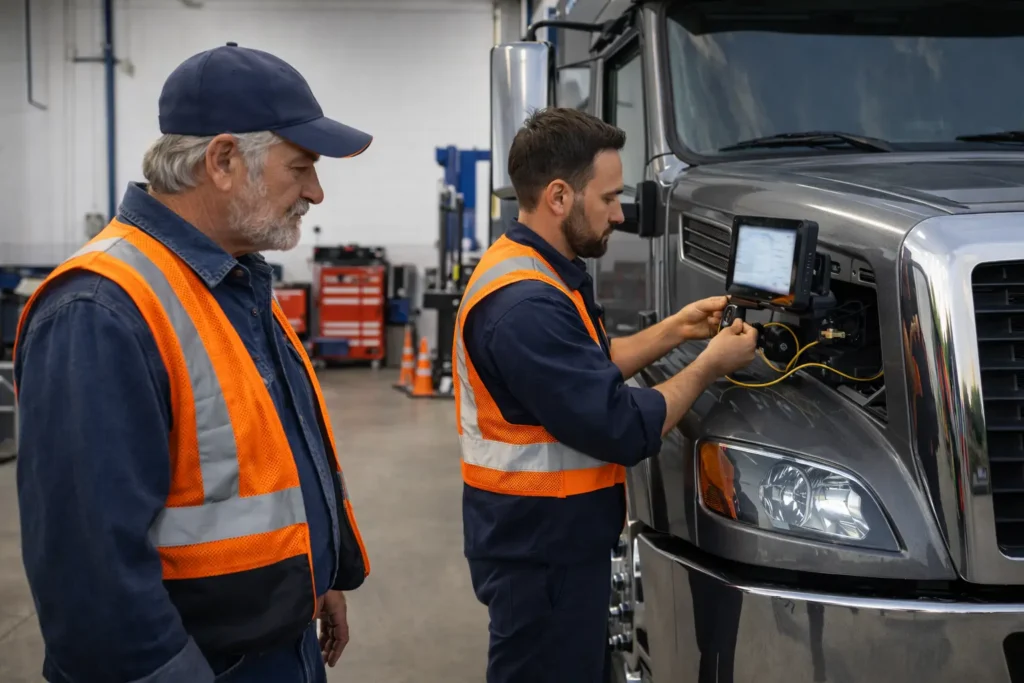
Truck driver and technician analyzing truck diagnostics

How Do Predictable Freight, Stable Lanes, and Honest Home Time Improve Driver Retention?

Predictability is often undervalued because it looks less dramatic than a pay increase or a sign-on bonus. Yet for experienced drivers, predictable weeks frequently matter more than occasional high-earning weeks that come with constant volatility. Stable lanes, realistic appointment windows, advance preplans, and truthful home-time commitments reduce uncertainty across the entire job. They also make it easier for drivers to protect sleep, personal obligations, and income.

This matters because long-haul work already includes structural stress. NIOSH explains that life on the road is made harder by irregular schedules, long hours, stress, limited physical activity, and limited access to healthy food 2. When a carrier adds unnecessary schedule volatility on top of those conditions, it turns a demanding job into an exhausting one. Predictable freight cannot remove every challenge from trucking, but it can reduce the number of avoidable ones.

Honest home time is especially important. Many drivers can tolerate a hard week if they trust the plan. What destroys trust is a pattern of promising one thing and delivering another. If home time is missed, the company should communicate early, explain why, and make the remedy visible. Veteran drivers do not expect perfection from a live freight network. They do expect honesty, foresight, and follow-through.

Predictability also affects safety and parking. FMCSA’s current truck parking research recognizes that parking shortages create measurable costs, including extra miles driven to find parking, unauthorized parking, early stopping, and off-route driving 3. When appointments are unrealistic or the next load is not planned until the last moment, those parking and rest pressures intensify. Good operations design therefore protects both schedule integrity and driver well-being.

Which operational habits make schedules feel reliable?

The habits are usually small but consistent. Preplan before delivery rather than afterward. Build appointment windows that reflect actual customer behavior. Track planned versus actual home time. Watch which customers regularly create dwell, missed windows, or late-night parking problems, then use that data to challenge assumptions in customer planning. Stability does not come from one policy statement. It comes from repeated operational discipline.

Schedule issue drivers experienceOperational response that builds trust
Last-minute lane swapsIssue preplans 24 to 48 hours ahead whenever possible
Missed home timeTrack compliance and communicate make-good steps clearly
Unrealistic appointmentsAdjust planning standards using actual dwell and travel data
Parking pressure late in the dayPlan route timing and stop windows with parking realities in mind
Surprises at shipper or receiverAdd site-specific notes to every repeat load brief

What Does Pay Transparency Look Like to Veteran Truck Drivers?

For experienced drivers, compensation is about more than headline rate. Pay transparency means being able to understand how money is earned, when accessorials apply, how exceptions are documented, and how errors are corrected. Drivers do not want to decode settlements like accountants. They want clean, line-item clarity that matches what actually happened during the week.

This is one of the easiest areas for carriers to underestimate. Leaders may assume that drivers only care about the top rate or the gross weekly average. In reality, veteran drivers often judge trustworthiness by the small details. Was detention captured from the right time? Did the layover payment match policy? Was a lumper fee reimbursed without repeated follow-up? Did payroll explain the adjustment, or did the driver have to chase it? Ambiguity in these moments can outweigh a strong advertised pay package.

The relevance of detention in particular is well established. ATRI’s 2024 work on the costs and consequences of truck driver detention underscores that detention remains a serious operational and financial burden for the industry 4. That supports what drivers have long known from experience: when dwell is treated casually, driver income and network efficiency both suffer. A carrier that aggressively documents detention, negotiates recovery, and pays drivers promptly sends a strong signal that driver time has value.

Transparent pay systems should therefore do three things at once. First, they should define the base method clearly, whether that is cents per mile, percentage, day rate, or another model. Second, they should spell out accessorial clocks and qualification rules in plain language. Third, they should publish a correction process with a response standard so drivers know what happens when something is wrong. Trust increases when drivers can see the policy, the math, and the remedy.

Why do payroll errors damage retention so quickly?

Payroll errors matter because they force drivers to relive operational failures after the work is already done. A missed pickup window is frustrating. A missed detention payment after that delay is demoralizing. By the time a settlement error appears, the driver has already absorbed the dwell, the schedule disruption, and often the parking or rest complication that came with it. If payroll then responds slowly or vaguely, the company appears indifferent to the cumulative cost of the problem.

Truck driver reviewing logistics on a tablet at café

Which Equipment and Maintenance Decisions Matter Most to Experienced Drivers?

Equipment is one of the clearest ways a carrier makes respect visible. Drivers experience equipment quality physically. They feel it in climate control during rest, in the dependability of the tractor, in the usability of cab features, and in how much downtime the week includes. A late-model truck does not automatically create loyalty, but unreliable equipment consistently destroys it.

Experienced drivers tend to care less about superficial features than about uptime, comfort, and repair discipline. They want preventive maintenance completed on schedule, fast roadside coordination, clear breakdown procedures, and a realistic plan for extended shop stays. If a truck goes down, they want one team to own the problem rather than multiple departments shifting responsibility. They also notice whether the carrier makes practical investments that help them recover properly between driving periods.

FMCSA’s fatigue guidance is relevant here as well. The agency connects impaired alertness with crash risk and stresses the importance of adequate rest 1. Equipment features that preserve rest—such as dependable HVAC, power systems, and sleepers that function as intended—support the same safety goals carriers claim to prioritize. In that sense, equipment quality is not just an asset utilization issue. It is a safety and retention issue.

Maintenance communication matters almost as much as maintenance itself. Drivers can tolerate a mechanical issue more easily than an information vacuum. If the repair process includes quick triage, clear status updates, realistic estimates, and a backup plan when delays extend, trust can survive the disruption. If the driver is left waiting on unclear approvals and repeated phone calls, a repair becomes a symbol of organizational disorder.

How Can Carriers Build a Safety-First Culture That Drivers Believe?

A real safety-first culture does not begin with posters or training decks. It begins when a driver encounters weather, fatigue, securement concerns, or customer pressure and can make the safer decision without fearing retaliation. Veteran drivers pay close attention to this because they know the difference between a company that says safety comes first and one that proves it when the load is at risk.

FMCSA’s fatigue material makes the stakes plain. Drowsiness can impair reaction time, and being awake for 18 hours may create impairment comparable to a blood alcohol concentration of 0.08 percent 1. Those findings are directly relevant to dispatch planning and driver communication. If a driver says a weather delay, parking shortage, or customer hold has created an unsafe situation, the company’s response becomes a test of whether safety is truly operationalized.

A believable safety culture has several characteristics. Drivers have explicit authority to stop or delay when conditions are unsafe. Safety holds are documented clearly in the operating system so payroll and customer service can respond without ambiguity. Preventable pressures, such as unrealistic appointment commitments or punitive treatment of late deliveries, are addressed at the planning level rather than pushed onto the driver. And when incidents or close calls occur, leaders focus on process improvement, not reflexive blame.

The connection to retention is straightforward. Experienced drivers want to work where their judgment is treated as an asset. If the carrier undermines that judgment whenever a shipment is urgent, the company sends the message that production matters more than professionalism. That message travels quickly through driver networks.

What makes safety culture credible instead of performative?

Credibility comes from consistent consequences and consistent protections. If a driver can document a weather hold and still receive fair treatment, the culture is credible. If a driver refuses an unsafe load and leadership backs that decision in practice, the culture is credible. If safety language disappears the moment service pressure rises, drivers conclude that the culture is decorative.

How Should Back-Office Support Be Organized So Driver Problems Get Solved Fast?

The best support model is not necessarily the one with the most departments. It is the one that resolves exceptions quickly without forcing the driver to navigate internal complexity. Breakdowns, lumper approvals, permit questions, missing purchase orders, detention disputes, and last-minute parking problems all test whether the carrier’s support structure is designed around driver time or around internal silos.

What experienced drivers want is simple: first-contact problem solving whenever possible. A centralized 24/7 support model can deliver that well if notes, approvals, and escalation paths are unified. A decentralized dispatcher-led model can also work when ownership remains clear and handoffs are disciplined. The wrong model is any model in which drivers must explain the same issue repeatedly to different people while the clock keeps running.

Parking is a useful example. FMCSA’s truck parking research specifically highlights the costs of driving extra miles to find legal parking, stopping early because spaces may disappear, or parking in unauthorized locations 3. If operations support is weak, those costs fall directly on the driver. If operations support is strong, the carrier actively helps the driver protect time, compliance, and safety.

Detention and lumper workflows reveal the same principle. Standing authority within clear limits often protects driver time better than repeated approval calls. A well-designed system documents the event, gets the driver moving, and handles cost recovery in the background. A poorly designed system saves pennies in control but loses hours in dwell.

How Should Carriers Use Technology Without Making Drivers Feel Surveilled?

Technology is valuable when it reduces friction. It becomes destructive when it creates additional clicks, duplicate data entry, false timestamps, or a sense that every tool exists mainly to monitor rather than support the driver. Experienced drivers tend to welcome useful technology and reject intrusive or unreliable technology. The distinction depends on how the tools are implemented.

A driver-centered technology stack does four things well. It works in weak-signal environments. It eliminates redundant entry across dispatch, compliance, scanning, and payroll tools. It captures documents cleanly enough to speed settlement. And it uses data for coaching and process improvement rather than surveillance theater. When technology does those things, drivers experience it as support. When it fails at them, it becomes another source of friction.

This matters for retention because the average driver does not judge technology by vendor promises. Drivers judge it by whether the app loads in the yard, whether geofencing creates false arrivals, whether they must retype the same trailer number in three systems, and whether a blurry document upload delays pay. In other words, they judge it the same way they judge every other part of the operation: by how it affects time, clarity, and income.

A disciplined rollout therefore requires field testing, fallback workflows, role-specific training, and adoption measures that actually reflect driver experience. The best tools become almost invisible because they quietly remove paperwork, phone tag, and settlement delays.

How Do Respect, Recognition, and Career Growth Keep Veteran Drivers From Leaving?

Recognition matters most when it is attached to real control, real listening, and real growth. Veteran drivers can usually tell the difference between recognition that reflects operational respect and recognition that tries to compensate for operational disorder. Awards, gift cards, and appreciation campaigns are not meaningless, but they do not outweigh chronic unpredictability, unresolved payroll issues, or repeated home-time misses.

The more durable form of respect is structural. Drivers feel respected when their judgment is trusted, when safety holds are not punished, when endorsements or training are supported, and when promotion paths are visible. They also feel respected when their experience influences policy through driver councils, feedback loops, or direct participation in customer and scheduling reviews.

Health and work-design evidence adds weight to this point. NIOSH’s survey of 1,670 long-haul truck drivers found that 69 percent were obese compared with 31 percent of U.S. working adults, 51 percent were current smokers compared with 19 percent of the general working population, and 14 percent reported diabetes compared with 7 percent in the general population 5. Those numbers do not mean carriers can solve every structural challenge of trucking. They do mean that the work environment carries long-term consequences. Respect therefore includes reducing avoidable stressors and giving drivers more control where possible.

Career growth should be treated the same way. Reimbursing endorsements, clarifying trainer or specialized-freight pathways, publishing time-to-promotion bands, and connecting recognition to measurable safety and service performance all tell experienced drivers that the company sees them as long-term professionals rather than temporary seat-fillers.

What Should Carriers Prioritize Over the Next 12 to 24 Months to Improve Driver Experience?

The next phase of competition for experienced truck drivers will be shaped less by recruiting creativity and more by operational proof. Information now travels quickly through reviews, referrals, driver communities, and publicly available safety and industry data. That means carriers cannot rely on broad brand claims for long. They have to show evidence that the driver experience they advertise is the one they deliver.

The most important strategic move is to make the driver experience observable. Track home-time compliance. Track first-contact resolution. Track time to payroll correction. Track breakdown turnaround. Track detention capture and payout speed. Track how often planning pushes drivers into avoidable parking pressure. Once those measures are visible, teams can stop arguing in abstractions and start improving the actual work.

The second priority is simplification. Many fleets do not need more initiatives; they need fewer conflicting processes. Communication standards, pay clarity, maintenance coordination, customer planning, and technology workflows should reinforce one another rather than create extra handoffs. Experienced drivers stay longer when the operation feels coherent.

The third priority is to use data to defend driver time. That means confronting chronic high-dwell customers, aligning appointments more realistically, documenting safety holds consistently, and using technology to reduce friction rather than increase oversight. The carrier that protects driver time will increasingly outperform the carrier that merely advertises appreciation.

What Is the Bottom Line for Carriers That Want to Keep Experienced Truck Drivers?

The bottom line is that experienced truck drivers are not asking for perfection. They are asking for coherence. They want to work in a system where communication is complete, scheduling is honest, pay is understandable, equipment is dependable, safety decisions are supported, and support teams solve problems without drama. When those pieces are present, a carrier feels professional. When they are missing, even strong recruiting copy or a competitive headline rate cannot fully compensate.

That is why the most effective retention strategy is not a single program but a better operating model. Every improvement that protects driver time, lowers uncertainty, and increases control strengthens the same message: this carrier understands how the job actually feels from the driver’s seat. For veteran drivers, that message is the difference between a company that sounds good and a company worth staying with.

FAQs About What Experienced Truck Drivers Expect From a Carrier

What do experienced truck drivers look for in a carrier first?

Most experienced truck drivers look first at how the company operates in real life. They want clear communication, predictable freight, accurate pay, reliable equipment, and support that solves problems quickly. Those daily operating signals tell them more than recruiting language ever will.

Why is home time so important for truck driver retention?

Home time matters because it represents honesty and control. Drivers can accept demanding work when they trust the plan, but repeated home-time misses signal that the operation is unstable or that driver commitments are easy to break. That damages retention quickly.

How does pay transparency affect experienced truck drivers?

Pay transparency reduces the distrust created by unclear settlements and unresolved accessorials. When drivers understand how they are paid, when detention starts, how corrections work, and when disputes will be resolved, they are far more likely to view the carrier as fair and professionally run.

What kind of communication do truck drivers prefer from dispatch?

Most prefer complete load briefs, exception-based updates, and a single source of truth for approvals and changes. They do not want constant interruptions or fragmented messages. They want timely, useful communication that helps them make good decisions on the road.

Can better technology really improve truck driver retention?

Yes, when the technology removes friction instead of adding it. Tools that reduce paperwork, prevent duplicate entry, improve document capture, and preserve clean settlement workflows can improve the driver experience materially. Technology that behaves like surveillance or fails in the field usually has the opposite effect.

How can a carrier show drivers real respect instead of symbolic recognition?

A carrier shows real respect by protecting driver time, backing safety decisions, keeping pay clean, supporting growth, and listening to experienced drivers when policies are reviewed. Symbolic recognition can help, but it cannot replace operational credibility.

Today Is The ELD Compliance Deadline

ExpressTruckTax goes over the ELD compliance deadline

Guess what day it is! You wife’s birthday? Well maybe. Your anniversary? If it is then we hope you’re prepared…But, actually, it’s the ELD compliance deadline day. We hope you have ELDs installed in your trucks or you could have some penalties to face.

While some truckers consider the ELD mandate to be positive, many drivers feel negatively towards it. Some drivers even said they would quit if the ELD mandate took place. However, all we can do today is wait see how it will affect the trucking industry.

Today Is The ELD Compliance Deadline

If you don’t have an ELD device yet, you might wanna go ahead and order one as soon as possible, even though there is a major shortage affecting the nation. Amil Freight has a great ELD/AOBRD device with instructional demos to teach you how to use it.

Now, you don’t need to worry if you don’t have an ELD today because the Commercial Vehicle Safety Alliance (CVSA) has given you a bit of time to comply with the mandate with their out-of-service-criteria (OOSC).

Under this criteria you have until April 1, 2018 to have an ELD device installed before you will be placed out of service. But this doesn’t mean you can get by without having an ELD until then.

Beginning today, December 18, roadside personal and inspectors will start checking vehicles for ELDS and reserve the right to issue expensive citations if you don’t have one. You could get away with a warning or you could get ticketed. It will all depend on who pulls you over and how lucky you are today.

Also, if you have a grandfathered AOBRD or automatic onboard recording device that was installed before today then you have until December 16, 2019 to switch to an ELD device. So, lucky you, enjoy your extra time.

ExpressTruckTax notes ELD benefits for truckers

ELDs are here today leaving us with two options. We can quit or look at the positives and we’re choosing to look at the positives because ELDs actually have some pretty good benefits. For example, they will reduce paperwork.

As a trucker with an ELD, you can say goodbye to your paper logbook because your ELD will automatically record your miles traveled per jurisdiction. You won’t have to record your odometer reading every time you cross a state line or manually record your trips by hand. Also, this information will make it easier to complete your IFTA return.

Then back at the office you and your secretary won’t have to spend hours processing and entering this information into a computer for HOS compliance because it will all be stored in one convenient location online.

Your dispatcher will also be able to track your rig live! This will allow them to provide instantly check calls, find a shop nearby if you break down, provide more accurate ETAs without distracting you, and more.

Do You Have Your ELD?

We hope you already have your ELD, but if you don’t you have a few months to get one before you will be placed out of service. Please let us know how this compliance deadline is affecting you and share your thoughts about the ELD mandate in the comment section below. Visit ExpressTruckTax for more trucking blogs.

Wreaths Across America Depends On Truckers

ExpressTruckTax supports truckers and veterans

Happy Holidays trucking nation. Hanukkah has started and Christmas is almost here. We hope you’re making the most out of the season by spending time with your loved ones and enjoying your favorite holiday traditions.

While shopping for your favorite people and crafting the perfect gift list for yourself, we know that you’re also taking the time to think of others. One major way truckers can give back to the community is to assist with Wreaths Across America.

Wreaths Across America

Wreaths Across America aims to remember and honor fallen U.S. veterans by placing a Christmas wreath on each veteran grave marker. This event takes place at the Arlington National Cemetery and many other locations across the nation.

Another purpose of this wreath laying event is to teach our nation’s children about the sacrifices made by our veterans and their families to protect our freedoms. Also, because many truckers participate in this event, they engage in educational sessions for local students to learn about the trucking industry.
The Wreaths Across America non-profit organization was founded in 2007 and has spread across all 50 states, but largely depends on the help of truckers to transport and lay enough wreaths to honor fallen heroes.

On every third Saturday of December, National Wreaths Across America Day takes place with wreath-laying ceremonies across the nation. In 2016, over a million wreaths were delivered with over 300 trucks volunteering by carrying about 5,000 wreaths per vehicle.

ExpressTruckTax thanks truckers and veterans

It takes about 60 trucks to deliver wreaths to Arlington alone and they drive from Maine to Virginia, creating the largest veterans parade in the world. This year National Wreaths Across America Day is on Saturday, December 16, and there are multiple ways you can help.

First of all, you can donate wreaths to honor the fallen men and women who sacrificed to defend our nation. Even by just donating one wreath to honor a grave helps Wreaths Across America complete their goal.

You can also donate your trucking services to help transport wreaths all over the country. There are over 1,200 locations participating. Wreaths Across America also needs volunteers to lay wreaths on graves during the event.

Those laying wreaths on veterans graves actually say the veteran’s name out loud and take a moment to thank them for their service as a way to honor their memory and keep it alive.

Even if you don’t donate your services, you can still show support by taking your family to the event. Many different ceremonies are scheduled throughout the day and the veterans parade is something you don’t want to miss.

If you’re too busy to attend National Wreaths Across America Day you can still help by attending the Wreath Retrieval/Clean-Up Day on Saturday, January 20, 2018.

Thank You Truckers And Veterans

ExpressTruckTax can never thank truckers and veterans enough. Thank you for your hard work and sacrifice. We hope you are able to take the time to head to a National Cemetery nearby to remember fallen heroes this Saturday.

Please share your thoughts on National Wreaths Across America Day in the comment section below.

How To Combat The Driver Shortage

ExpressTruckTax supports truckers

There is a major driver shortage facing the trucking industry and with the upcoming ELD mandate a lot of truckers, including the road veterans who love their job may quit.

If the driver shortage grows at an even more rapid rate the nation could face economic disaster because truckers are the backbone of our economy. With a current driver shortage of 48,000 drivers that’s only increasing we hope carriers are doing something to combat the issue. We even have a few ideas on how they can do so.

Fighting The Driver Shortage

1. Make Trucking More Inviting To Women

Women are an untapped working resource in America. While 47% of women make up the workforce only 6% are in trucking. That’s an incredibly low number, even though statistically women are better drivers. They have a lower rate of getting into accidents and often benefit from lower insurance rates because of it.

One thing that might turn women away from the industry is its reputation for being super manly. For example, if the true road warriors get hurt, they don’t notice. They simply rub some dirt in it and go about their days. Trucking can seem so manly at times it may be intimidating.

That’s why there are groups like Women In Trucking that show off women drivers, advocate for them, and show ladies that they have what it takes to become awesome truckers. Use their example to bring more gender diversity to the industry.

2. Should the Industry Lower The CDL Age?

Currently, if you’re under 21 you can only get your CDL for intrastate trucking. That means you can only deliver loads within your state until you turn 21. This makes things tricky for young drivers because local jobs tend to go to older, more experienced drivers.

If a younger person wants to become a driver the 3-year gap of having to wait after high school could be extremely demotivating. Plus, they might find another career path while they’re waiting.

But is 18 too young? Some experienced drivers say that there is no way an 18-year-old can handle the trucking lifestyle, while others say, if they are serious and mature enough to handle it then they should be able to.

3. Improve Health Conditions

Depending on how you handle it, trucking can be an extremely unhealthy profession. Sometimes drivers don’t make enough pay to get healthier food options, so they spend what they can on unhealthy fast food options for every meal.

Also, if they drive too many hours and need to sleep, they don’t have any time to work out. Plus, most carriers don’t provide drivers with good health benefits, so they don’t even have the tools they need to check up on their health.

ExpressTruckTax supports female truckers

Things like raising pay, reducing OTR hours, providing good health benefits, and providing health education could make a major difference. Obesity, heart conditions, and sleep apnea are only a few of the major health risks facing the industry.

Free health screenings, work out equipment in the cab, seminars about how to eat healthier on the road, and more could really improve trucker health and as a result, less people might be scared away from becoming a driver.

We Support Truckers

Our nation only functions because of the hard work that drivers do every single day and night. The growing shortage could cause a major economical disaster, but hopefully, carriers are getting prepared to combat it.

Please share your ideas about how to combat the shortage in the comment section below and visit ExpressTruckTax.com for more trucking blogs.

Prepare For Operation Safe Driver Week

Learn about CVSA with ExpressTruckTax

It’s no secret that we care about trucker safety. The hard-working men and women who deliver goods all across the nation deserve to make it home to their families safely. They are incredibly brave to take on the trucking lifestyle, especially when trucking is considered to be the most hazardous profession in America.

Habits like speeding, driving distracted, driving tired, not complying with the laws, and more endanger our roads. That’s why the CVSA (Commercial Vehicle Safety Alliance) has put together a series of safety weeks to educate transportation professionals on safety and to enforce compliance. Their next safety check is Operation Safe Driver Week, and it will take place October 15-21st, 2017.

CSVA’s Operation Safe Driver Week

Operation Safe Driver Week is coming up in just a few days, so be prepared to pass inspection. During this week law enforcement personnel from all across the country will engage in increased traffic safety enforcement and education to fight unsafe driving practices exhibited by commercial vehicle drivers and their passengers.

In 2015, 3,852 people died in large truck accidents. 69% of these people were drivers and passengers in other vehicles, while 16% were drivers and passengers of commercial vehicles. CVSA hopes to reduce these numbers.

That’s why this safety check was created to decrease the number of accidents, injuries, and deaths involving large passenger and transportation vehicles, including trucks and buses due to unsafe driving habits and behaviors. The leading cause of accidents involving commercial vehicles is due to unsafe drivers.

A few things that officers will have their eye out for during this safety check include speeding, texting while driving, seatbelt usage, tailgating, improper lane changing, failure to obey traffic safety tools, and more.

If you or your passengers are identified as exhibiting any of these unsafe behaviors then you may be issued warnings or citations. It would be much easier to avoid this headache altogether by simply practicing safe driving habits at all times.

ExpressTruckTax recommends safe driving habits
Don’t text and drive!

Don’t think that you can do whatever you want on the road to get away with it. The bears, city kitties, foxes in the hen houses, and more will all be looking for you. Especially because FMCSA has joined forces with CVSA to sponsor Operation Safe Driver Week.

They also have tons of support from safety transportation organizations with the common goal of improving road safety by addressing drivers operating unsafely and their passengers on an individual basis.

There are a number of things you can do to start improving driver safety today. For example, slow down. Speeding is dangerous, and going slower will help you more gas efficient. You can also make sure you’re well rested and avoid driving tired, which is equal to driving drunk.

Also, you can put all of your electronic devices down to avoid driving distracted and make sure your seatbelt is always on. They really do their part when it comes to saving lives. Another thing you can do is give other vehicles enough space so you will have time to stop if they suddenly hit the brakes.

Keep Up Your Safe Driving

We know you can handle Operation Safe Driver Week! Just keep doing your part to make the roads a safe place and you won’t get a citation. The best way to promote safety is to spread awareness, so be sure to pass these tips along to fellow drivers. If you have anything about safety to add please share your thoughts in the comment section below.

Visit ExpressTruckTax.com for more trucking blogs.

Todd McCann Shares, “Truckers Go Turtle Racing”

ExpressTaxTax learns about turtle racing

Today we have a special gift for you because Todd McCann has agreed to share his turtle racing article and podcast with us. Todd McCann has been a truck driver since ’97 and reports on his experiences on the road as he hosts his trucking podcast/blog, Trucker Dump. Check out what he has to say about turtle racing. Read the article here or listen to the podcast here. 

Truckers Go Turtle Racing

Turtles are cool. If I see one trying to cross the road, I’m the kinda guy that’ll pull over and carry him across the road to safety. That is, unless it’s one of those Teenage Mutant Ninja Turtles. If I see one of them in the road, I’m gonna stick out my tongue, close one eye, take aim, and hit the accelerator. Man, those “dudes” are annoying.

So why would I go out of my way to help a turtle cross the road? Well, like I said, they’re cool, but it’s also because The Evil Overlord likes that about me. What can I say? I’m a sweetie. Still, the main reason is simply because he’s so freakin’ slow. By the way, I do always assume it’s a male turtle crossing the road. My thinking is that the only thing that could make a turtle jump out into traffic is a lady turtle batting her eyes and wiggling her sexy little tail around.

So anyway, why all the talk about turtles? Well, because the trucking industry has its own version of turtles. Only no one likes them. I’m talking about speed-limited trucks. Specifically, I’m talking about two speed-limited trucks trying to pass each other out on the highway. You know; Turtle Racing.

Whether your vehicle has 18 wheels or four, we’ve all experienced a Turtle Race. You’re tooling along in the fast lane, when some trucker jumps out in front of you. You calmly slow down and follow while this truck slooooooowly creeps up and passes the slightly slower truck. I assume you were calm, right? I mean, it only took five minutes for dillmunch #1 to pass dillmunch #2.

Notice that I called both of these drivers “dillmunch.” Besides the fact that I have no earthly idea what a dillmunch is, I still say the turtle race was both of these driver’s faults. It takes two to do the Tango and it takes two to race. If you were to ask most drivers whose fault it is, they’d blame the guy trying to pass. I agree… and I disagree. Let’s take a look at that.

Okay. Say my truck will go a mind-blowing warp speed of 65 mph. I’m coming up on a truck going 64 mph. Sure, I could tap my brake, lower my cruise control, and stare at his trailer doors all day. After all, I am looking pretty smokin’ in those reflective doors. But why should I have to slow down because my truck is faster than his? Wouldn’t it make more sense to let the faster truck get on with his business?

The thing is, it takes two drivers with common sense, professional attitudes, and the willingness to put themselves in the other driver’s shoes. Those are three attributes that are sorely missing in today’s trucking industry. Nowadays, everyone is out for themselves.

Drivers can’t be bothered to let you go around them before they take ten minutes to back into a wide-open parking spot. The same guys don’t have a second thought about butting in line to get to the shipping clerk’s window. Nor do they mind parking in front of the fuel bay while they mosey into the truck stop, stand in line to get their fuel receipt, take a dump, fill up their thermos, and grab some to-go food; hopefully in that order. 

Todd McCann explains how to avoid turtle racing to ExpressTruckTax

These are the same drivers who see the faster truck coming up behind them. They’re the drivers who see you in their mirror as you pull out to pass. The same jerk who can see the traffic stacking up behind you. The worthless puddle of dog vomit that refuses to tap his brakes, even though he can clearly see you’re going to pass him eventually.

Here’s how I try to deal with this. First, I give the driver the benefit of the doubt, trusting that as soon as he notices me, he’ll let me around. Hey, it could happen. Once I’ve caught his beady little eyes looking at me in his mirror, I wait a few seconds to see if he’s gonna back out of it. If he doesn’t, I resort to a drastic step. Well, it is for me anyway.

I break out the “Official Communication Device of Hell”, otherwise known as the CB radio. Again, I’ll be nice at first. Maybe he’s into a good audiobook and the situation just hasn’t registered in his puny little brain. I’ll key up the mic and say in a friendly voice, “Hey driver. How about a little driver courtesy here?” Sometimes that works. Other times, the guy doesn’t have his CB turned on. Can’t say as I blame him for that. Still other times, you know you’ve got a real winner on your hands when he picks up the mic and says, “If you can’t pass me faster than that, it’s not my problem.” Oh my. What do you do with a guy like this?

That’s when I take a deep, calming breath and explain to him that we as drivers are never going to get respect and cooperation from the public if we can’t even get it from our fellow drivers. I’m often filled with awe from their insightful comeback. Something truly wise, like, “Shut up, stupid.”

This is what we’re dealing with out here. All this could be avoided if drivers just had a little common courtesy towards each other. Instead, we’re all faced with turtle racing every day. And as for you four-wheelers, don’t think you’re exempt either. The only thing more frustrating than being stuck behind turtle racing trucks, is to be stuck behind turtle racing four-wheelers. For the love of Pete, folks. Trust me on this. It’s okay to turn your cruise control off. The car manufacturers have thoroughly tested these devices. You’re not gonna break anything. Except for my forehead, which is decisively bashing into my steering wheel with a head-banging force usually reserved for Slayer songs.

So here’s my plea to all drivers. Just get off the road and let me do my job. Okay, I guess that’s a bit impractical. So practically, let’s do this.

– First, keep your eyes open and pay attention. They key to avoiding turtle racing is knowing when it’s actually happening and then doing whatever it takes to help the situation.
– If you need to instigate a turtle race, wait until most of the traffic behind you has cleared. If traffic is heavy and you’re going to be holding people up, just tap your brakes and follow the slow-poke until traffic thins. Then mount your attack.
– If you’re the slower driver, be a sport. Tap your brakes and let the other driver around. It’s not like you’re approaching 88 mph and if you don’t reach it in time, you’ll be stuck in the past… or future.
– If you’re the faster driver, use the CB to politely ask if the dimwit will let you around. My suggestion would be to NOT use the term “dimwit” when addressing said dimwit.
– If the slower driver ignores you, or worse, laughs at you, feel free to wave at him as you drive past his window. I leave the amount of fingers you use entirely up to you.
– If you’re the faster driver, and Captain Slo-Mo just won’t let you around, even after multiple attempts, be the bigger man (or woman). Back out of it, get behind him, and let all the backed-up traffic go on their merry little, un-speed-limited way.
– Now for the final and most important step. Concentrate hard and wish for the next toilet seat he visits to be infested with crabs. Now, don’t you feel better?

Thanks For Sharing, Todd! 

We hope you enjoyed learning about turtle racing as much as we did. Who is better to learn from than an actual driver?! If you have any thoughts to share about turtle racing please post them in the comment section below and visit ExpressTruckTax.com for more trucking blogs.

Bio: 
Todd McCann is a 20-year trucker, producer of the Trucker Dump podcast/blog, and author of two ebooks; How to Find a Great Truck Driving Job and Trucking Life: An Entertaining, Yet Informative Guide To Becoming And Being A Truck Driver. Learn more at AboutTruckDriving.com.

New Bill Could Ban Human Trafficking Convicts From Getting a CDL

ExpressTruckTax is partners with Truckers Against Trafficking because we believe in what’s being done in the trucking industry to save lives and fight human trafficking. Every part of the fight is to make our roads a safer place helps put an end to the human slavery that exists today.

Although there is still a lot of work that needs to be done, the trucking industry can celebrate a win in the fight against trafficking, because the U.S. Senate approved two bills that would greatly crackdown on human trafficking in commercial vehicles.

No Human Trafficking On Our Roads Act

The No Human Trafficking On Our Roads Act is the bill that if passed will disqualify anyone with human trafficking convictions from holding a CDL permanently. Meaning they would have a lifetime CDL ban. The act specifies that the CDL ban would be placed on any trucker “who uses a commercial vehicle in committing a felony involving an act or practice [in violation of] the Trafficking Victims Protection Act”.

Even though this bill has been approved by the Senate, it still has a ways to go because it needs to be passed by the House and president Trump would need to sign it for it to go into effect. Then it would greatly affect those in the industry who have been convicted of a human trafficking felony because they would lose their CDL.

Combating Human Trafficking In Commercial Vehicles Act

Another bill passed by the Senate is the Combating Human Trafficking in Commercial Vehicles Act which would create a major human trafficking effort across DOT agencies. As a result of the bill, which is sponsored by Senator Amy Klobuchar, the position of human trafficking coordinator would be established.

The secretary of Transportation would select someone to fill the position and along with coordinating with multiple DOT agencies to create efforts towards preventing trafficking the bill would increase human trafficking education, Reporting efforts at FMCSA, improve human trafficking outreach, and even provide financial assistance to CDL schools that provide anti-human trafficking education.

You Can Help 

Human Trafficking

With 20.9 people enslaved worldwide human trafficking exists in many different forms. We know that it exists outside of the trucking industry, but it also exists in the industry and it’s up the honest, hard-working drivers to do their part to put an end to it by spreading awareness.

Eliminating human trafficking from our Nation’s highways will help to put an end to human slavery. All you have to do to help is make a call Truckers Against Trafficking at 1-888-37-37-888 if you see the signs of trafficking. Making the call is free and it only takes a minute or two. Plus, the one simple call could save lives. To learn the signs and for more educational tools click here.

Thank You Doing Your Part 

The first part of fighting human trafficking is to be aware that it exists. The second part of the fight is to stand up for what’s right and to do your part to stop it by spreading awareness and by reporting the signs if you see them. Thank you for being brave enough to stand up for this cause, to end human trafficking, not just among commercial vehicles, but in all forms of its existence.

Please share your thoughts about ending human trafficking in the comment section below and visit ExpressTruckTax.com for more trucking blogs.https://www.expresstrucktax.com

How To Save Big Money On Fuel This Year

Wendy Dessler has shared a true gift with the trucking community by providing you with a full list of ways to save on fuel. Fuel is your number one expense and it’s always great to cut down on costs, so it’s definitely worth it to check out Wendy’s guest blog! 

How To Save Big Money On Fuel This Year

The price of gasoline is rising, and we do not expect it to go back down anytime soon. But don’t panic. There are ways to save money on gasoline, and some may surprise you! We are going to list our favorites for you on how to fill your tank, but if you have any that we missed, be sure and let us know

Okay, let us get the common ones out of the way first:

– Share a ride. If you have coworkers, neighbors, or students that near by you and are willing to share rides with you, each of you would save 50% of the fuel you use going to work or school.

– Keep your tank full 

– Check your tire pressure
   –When your tires are under-inflated you lose 0.3% of gas for every 1 PSI

– Check your gas cap
   — If your gas cap is damaged or missing, you can lose up to 3 gallons of gas from evaporation every month

– Watch where you shop
    — Some grocery stores put points on a card for every dollar you spend with them. You use those points at their gas pumps and you get money off of every gallon of gas. In some cases you can get up to $1.00 per gallon off.

– Don’t turn running errands into a road trip
  — Schedule what you need to do in a way where you can make a route to each appointment. This saves time and money. If your daughter has dance class at 3 on Saturday and the dog needs to go to the groomer and you need a haircut, make the dog appointment at 2:30, drop the child at practice that lasts till 4 and schedule your hair appointment at 3:15. When you are finished, pick up the kid, then the dog and back home.

– Limit Idle time
   –We have all been told to let our car warm up before we drive, but that means for a moment or two. Then drive it at a slower pace for the first few miles. If it is in the dead of winter, warm it for 5 minutes, clear the glass with a ice scraper and go. After that you are just burning fuel for no reason.

– Get rid of extra weight
   — You lower your gas milage 1% for every 100 pounds you carry. So, if you never use those luggage racks or bike racks, take them off. If your trunk if filled with junk, clean it out. Throw out everything in the car that you have no use for, but that does not include you mother-in-law.

– Coast
   — You know there is a turn coming up so simply let off the gas and coast into position. Hitting the breakfast and then taking off fast uses a lot of fuel.

– Replace your air filter – it has to be clean to work

– Use less air conditioning
   — You use 5% – 25% more fuel than normal by leaving the air on max. Instead turn it down. When you are almost to your destination you can turn it off and should stay cool the last mile or two.

– Never buy your gas right off the highway.
  –They build those stations for folks who do not pay attention and end up running very low on fuel. They have no choice but to pay the higher price. Save money by driving a few blocks away. 

Author Bio

Wendy Dessler

Wendy is a super-connector with Outreachmama who helps businesses find their audience online through outreach, partnerships, and networking. She frequently writes about the latest advancements in digital marketing and focuses her efforts on developing customized blogger outreach plans depending on the industry and competition.

Thanks for Sharing, Wendy!

Now that y’all have more knowledge on how to be more fuel efficient it’s time to keep on trucking and put these tips to the test! If you have more fuel saving tips please share them in the comment section below and visit ExpressTruckTax.com for more trucking blogs. 

8 Mother’s Day Gifts For Your Trucking Mama

8 Mother's Day Gifts For Your Trucking Mama

Mother’s Day is on Sunday, have you gotten your Mom, wife, or girlfriend, or any of the Moms in your life a gift yet? Well, it’s close to the deadline but it’s not too late yet! Show the Mom in your life what she means to you. On this special day, we would like to give a shout out to the Moms in the trucking industry who do their part driving solo, in teams, dispatching, riding along with their husbands, handling the books at home, and more!

What To Give Your Trucking Mama

1. You know what women and Mom’s enjoy? A little attention to show them that they’re special to you. That’s why you could get your wife or Mom a pair of headphones so she can talk to you hands-free when she’s out on the road. They even have excellent wireless headphones these days so she won’t even have to deal with the hassle of tangled cords.

2. When you’re out on the road you have to eat and drink, that means your Mom does too. Maybe you can get her a crockpot so she can conveniently cook her own healthy and delicious meals when she’s out on the road. You could also get her a gift card to one of her favorite places to eat.

3. Is the Mom in your life a coffee fan? Then don’t make her walk across a truck stop parking lot in the morning for her first cup of the day! Get her a portable coffee maker to keep in her rig. She will love having the ability to brew a cup whenever she wants. Be sure to include a special mug too that has a loving message, photos of you or her favorite pet, or her favorite sports team on it.

4. Did you know most female truckers consider their rigs to be one of their babies? Maybe you could show you care by cleaning her truck for her. Go ahead and bust out the hose and suds to make that baby sparkle. Don’t stop with the outside, clean up the inside too. Wipe down the dash and the windows and clean out any trash or clutter.

5. Trucks are like a home away from home, so make sure the rig for the Mom in your life is cozy. Place some photos of yourself, the kids, or pets, around the truck for her to find. You could also write a series of special notes with reasons why you love her for her to find. Maybe weeks from now she will find another one of your notes and become overjoyed.

6. Is her sleeper cab comfortable enough for a good night’s rest? Sleep is important on the road and you don’t want your Mom or wife to drive tired. Does she need a better pillow? Space heater to stay warm? Softer blanket? Black out curtains to block the light? Ear plugs? The possibilities for making her rig more comfortable are endless.

7. Did you know that driving can boring? You probably did already, but that means the Mom in your life can get bored too. Get her an audio book or a subscription to an audio book streaming service to give her something fun to listen to for hours on the open road.

8. Let her relax. After getting home from a trip she will be tired, so cleaning the house or cooking dinner for the family might not be at the top of her list. Let her come home to a clean house and a home cooked meal so she can relax and catch up with everyone.

Don’t stop with a meal, have a movie picked out and ready to watch as a group, or you can get her a bubble bath kit with a bath bomb, lotion, and a candle, so she can take a load off for a while.

Appreciate Your Trucking Mama

No one makes you smile like the Mom in your life, so be sure to take the time to make her feel special this Mother’s Day. Moms all across the nation whether their drivers, work in the office, are involved in the trucking industry or not deserve to be celebrated for all that they do.

For more trucking tips visit ExpressTruckTax.com and please share your Mother’s Day gift ideas in the comment section below.